
Quick tutorial on creating Prompts for OpenAI
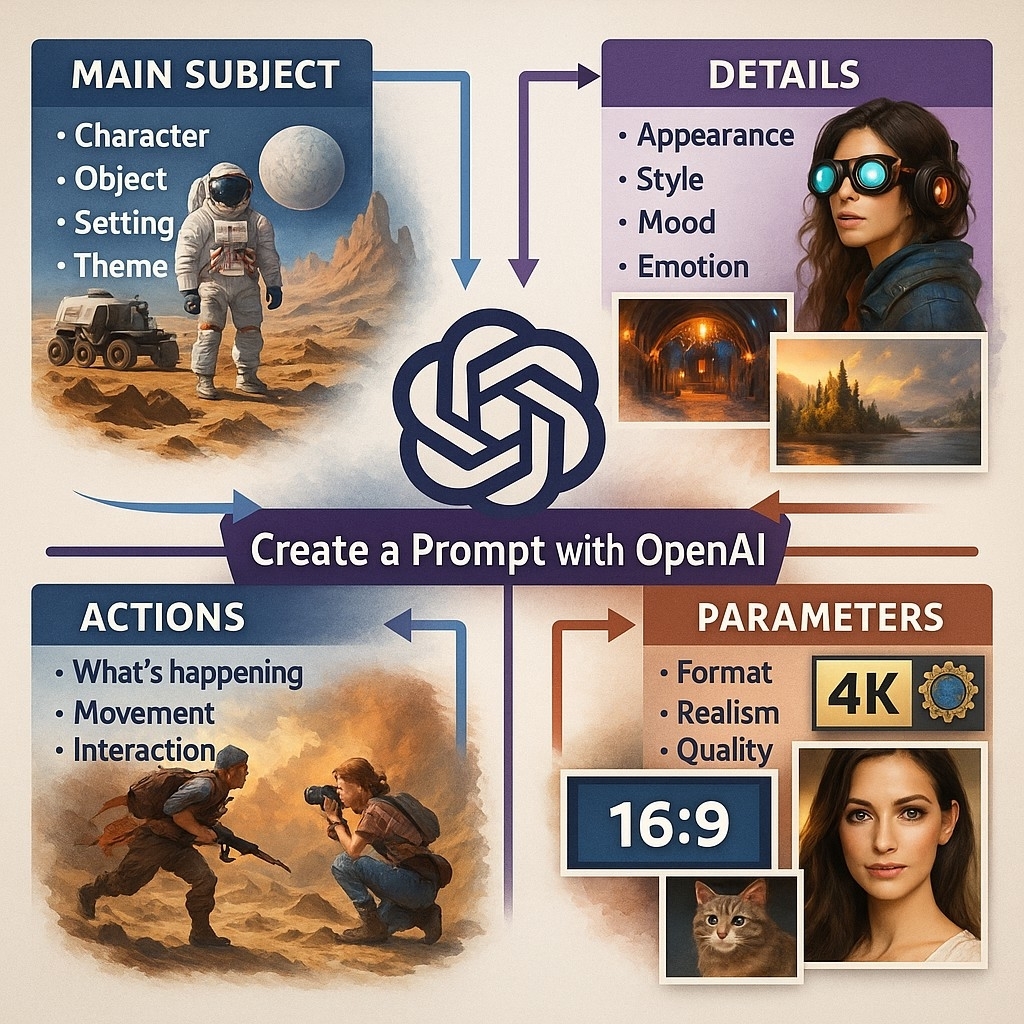
Service Overview
Prompt Creation Assistance for OpenAI – A-I-DESIGN
Qu'est-ce qu'un Prompt ?
Un Prompt est une instruction ou une description donnée à une intelligence artificielle (comme OpenAI) afin d'obtenir une réponse précise, pertinente et adaptée à un objectif donné.
La qualité de la consigne détermine directement la qualité du résultat.
What is a prompt?
A prompt is an instruction or description given to an artificial intelligence (like OpenAI) to obtain a precise, relevant, and appropriate response for a given purpose.
The quality of the prompt directly determines the quality of the result.
Bases d’un bon prompt pour Image 1.5 (OpenAI)
Un bon prompt contient généralement 4 composants clés :
1. 🎯 Sujet précis
Ce que tu veux représenter (ex. : un renard, un château, une fille dans un jardin…)
2. 🖌️ Style artistique
Dessin au crayon, aquarelle, bande dessinée, style manga, peinture à l’huile, style Pixar, esquisse, etc.
3. 💡 Ambiance / lumière / émotion
Ambiance sombre, lumineuse, rêveuse, nostalgique, dramatique…
4. 🔍 Détails visuels ou composition
Arrière-plan, vêtements, position, couleurs dominantes, cadrage (gros plan, plan large, vue du dessus…)
🧠 Structure de prompt recommandée
[Sujet], dans un style [artistique], avec une ambiance [émotion / lumière], composé de [détails ou éléments visuels]
Basics of a Good Prompt for Image 1.5 (OpenAI)
A good prompt generally contains four key components:
1. 🎯 Specific Subject
What you want to represent (e.g., a fox, a castle, a girl in a garden…)
2. 🖌️ Artistic Style
Pencil drawing, watercolor, comic book, manga style, oil painting, Pixar style, sketch, etc.
3. 💡 Atmosphere / Light / Emotion
Dark, bright, dreamy, nostalgic, dramatic atmosphere…
4. 🔍 Visual Details or Composition
Background, clothing, pose, dominant colors, framing (close-up, wide shot, top view…)
🧠 Recommended Prompt Structure
[Subject], in an [artistic] style, with an [emotional/lighting] atmosphere, composed of [details or visual elements]
Exemple de Prompt (Fr)
Robe classique pour femme présentée sur un mannequin : design élégant et intemporel, tissu long et fluide, taille cintrée, détails en dentelle subtils, douces teintes pastel comme l’ivoire ou le bleu pâle, style vintage années 1950, éclairage tamisé, fond blanc studio, grande précision des détails, sans texte, texture textile réaliste
Explication rapide :
- Sujet : robe de femme classique sur mannequin
- Style : vintage, années 1950
- Détails : taille marquée, dentelle, tissu fluide
- Couleurs : douces, pastels
- Arrière-plan : neutre pour bien mettre la robe en valeur
- Techniques : realistic, high detail, no text
Example of Prompt (En)
A classic women’s dress displayed on a mannequin, elegant and timeless design, long flowing fabric, fitted waist, subtle lace details, soft pastel colors like ivory or pale blue, vintage 1950s style, gentle lighting, white studio background, high detail, no text, realistic textile texture
Quick explanation:
- Subject: Classic women's dress on a mannequin
- Style: Vintage, 1950s
- Details: Defined waist, lace, flowing fabric
- Colors: Soft, pastel
- Background: Neutral to highlight the dress
- Techniques: Realistic, high detail, no text
Result obtained
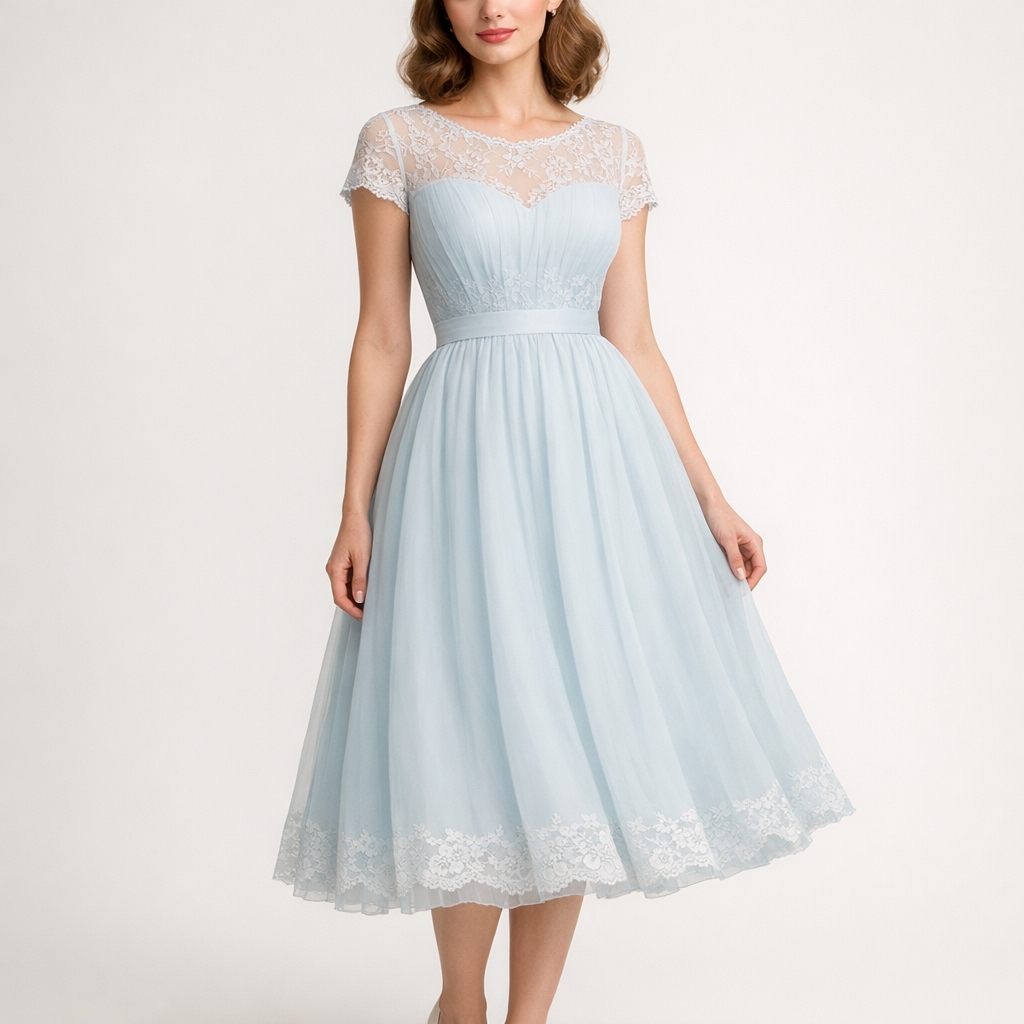
Certains mots dans un prompt peuvent être interprétés différemment par une IA et produire un résultat inattendu.
Cela arrive parce que les modèles :
- interprètent les mots selon leur contexte statistique
- associent certains termes à des styles visuels dominants
- comprennent mal les mots ambigus
- réagissent fortement à certains mots “chargés” (artistiques, techniques, émotionnels)
Some words in a prompt can be interpreted differently by an AI and produce an unexpected result.
This happens because the models:
- interpret words according to their statistical context
- associate certain terms with dominant visual styles
- understand ambiguous words poorly
- react strongly to certain "charged" words (artistic, technical, emotional)
Pourquoi un mot peut changer totalement le résultat ?
1️⃣ Ambiguïté
Exemple :
- “light” → peut signifier lumière, léger, clair
- “dramatic” → peut produire un éclairage sombre, pas une scène émotionnelle
2️⃣ Connotations culturelles
Exemple :
- “OZON” pourrait être associé à :
- marketplace russe
- chimie (ozone)
- branding
- spam
L’IA choisit l’interprétation la plus fréquente dans ses données.
3️⃣ Mots trop génériques
Exemple :
- “beautiful” → résultat vague
- “professional” → style corporate générique
🔧 Comment remplacer un mot pour obtenir le bon résultat ?
🧠 Méthode 1 — Spécifier au lieu de généraliser
❌ Mauvais :
Exemple de mauvais Prompt : beautiful woman
✅ Meilleur :
portrait of a 35-year-old woman, natural skin texture, soft daylight, realistic photography
Why can a single word completely change the result?
1️⃣ Ambiguity
Example:
“light” → can mean light, light, clear
“dramatic” → can produce dark lighting, not an emotional scene
2️⃣ Cultural connotations
Example:
- “OZON” could be associated with:
- Russian marketplace
- chemistry (ozone)
- branding
- spam
AI chooses the most frequent interpretation in its data.
3️⃣ Words that are too generic
Example:
“beautiful” → vague result
“professional” → generic corporate style
🔧 How to replace a word to get the right result?
🧠 Method 1 — Specify instead of generalize
❌ Bad:
Example of a bad prompt: beautiful woman
✅ Better:
portrait of a 35-year-old woman, natural skin texture, soft daylight, realistic photography